
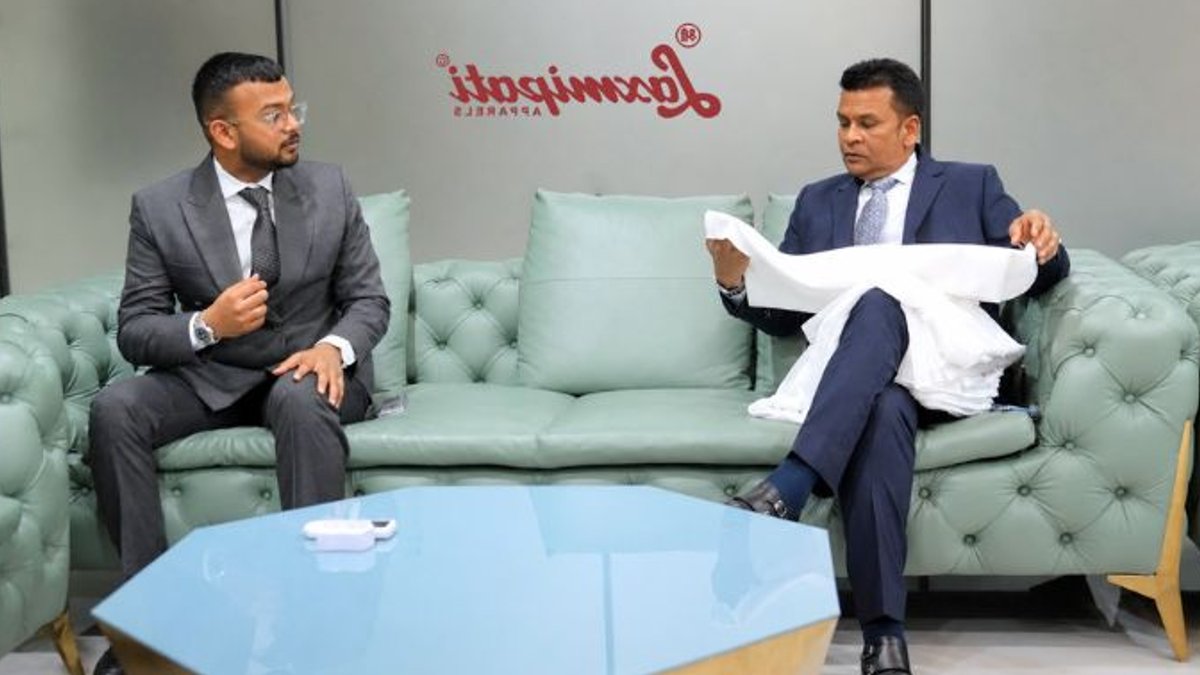
Surat has long been known as India’s largest fabric hub, but a new push is underway to transform the city into a serious apparel manufacturing destination. The shift is driven by a textile policy in Gujarat that makes it attractive for established players to move into garmenting and for new companies to set up shop. Laxmipati Group, a textile enterprise with roots in Surat spanning three generations and four decades, is at the forefront of this expansion. Guided by MD Sanjay Sarawagi, the group is now entering a new chapter led by Parth Sarawagi, a Director at Laxmipati Apparels and a University of Arizona graduate. The apparel manufacturing platform has been operational for two years.
Building an Integrated Ecosystem
Parth Sarawagi describes the venture as a natural extension of the group’s existing expertise in textiles, processing, and value addition. The goal is to create an integrated manufacturing ecosystem that serves the global apparel industry from fabric to finished garment. The company operates across domestic and export markets, supplying major brands such as Walmart, Ed Hardy, Express, and Eddie Bauer. According to Parth, having fabric, processing, and garmenting under one roof allows the company to develop products faster. This integrated setup shortens sampling and bulk lead times by 25 to 30 percent. It also provides buyers with a single point of accountability across the supply chain.
Read Also: Mysticism Trend Transforms Fashion with Personalized Symbolism
Parth explained the business logic behind this approach during an interview with Team Apparel Resources. He noted that Surat’s market had previously focused on selling fabric to garment exporters. He identified a gap where customers wanted a complete package rather than just raw material. “With four decades in textiles, we have already built complete backward integration,” Parth said. “In Surat’s market, the prevailing trend was to sell fabric to garment exporters and stop there. With our integrated base, we were well positioned to deliver the entire solution, fabric to garment, backed by standardised quality.” This gap is what led the group into apparel manufacturing through Laxmipati Apparels.
Scale and Technology
To support this focus on MMF, activewear, and athleisure, the company is building a composite manufacturing campus. The planned investment is Rs 670 crore. This facility will bring together spinning, knitting, processing, and garmenting operations alongside new stitching machines. Automation is being integrated into key parts of the process, from planning and inventory management to cutting and production monitoring. Digital systems allow real-time tracking of production and shipments, while automated spreading and cutting help improve fabric utilisation and reduce wastage.
Read Also: Column skirt leads fall fashion trend
On the sewing floor, advanced production systems and hanger automation manage workflow and line movement. The company uses bonding technology for categories like activewear and lingerie, where precision is critical. It has also invested in its sampling and product development capabilities. An in-house team of more than 50 designers, merchandisers, and production professionals connects fabric development with product creation. Quality is managed through multiple checkpoints, including in-house testing, fabric inspection, panel checks, and needle detection. Parth states these systems have helped keep rejection rates below 1 percent and client escalations close to zero.
Sustainability and Workforce
The company operates its plants on solar and wind power and expects to achieve net-zero status regarding coal within the next year. It holds certifications including SLCP, BSCI, SEDEX, WRAP, GRS, GOTS, and HIGG. The upcoming greenfield project is pursuing LEED certification. On the materials side, the company has invested in Sorona-based fabrics to blend natural and man-made fibres into performance textiles. A Zero Liquid Discharge treatment plant allows the company to recycle and reuse over 6 lakh litres of water daily, achieving 100 percent recycling of discharged water.