
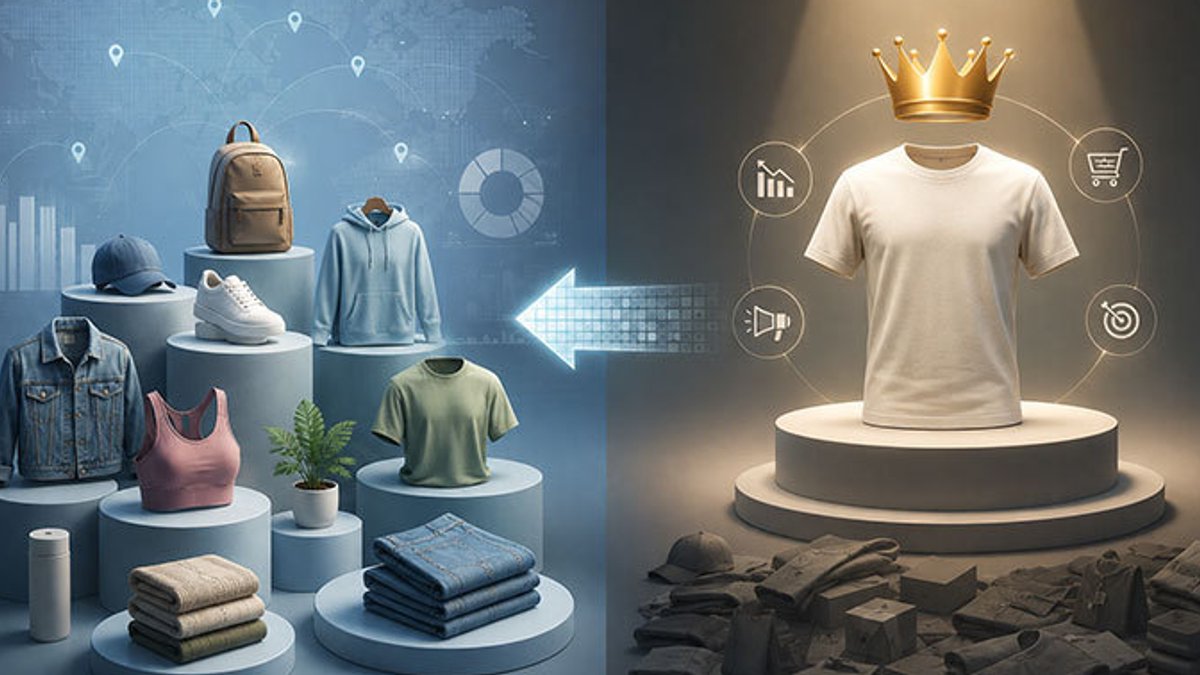
Many brands are moving beyond relying on a single bestseller to drive growth. Instead of depending on one high-performing item, companies are building a broader product portfolio with multiple categories to ensure stability and long-term success.
Less reliance on the top product
While these hero products remain the backbone of merchandising, their share of revenue has dropped at many companies. For example, the women’s denim brand Kraus Jeans has reduced the contribution of its hero styles from nearly 65% of revenue to around 50% by expanding into complementary categories.
Founder Ravi Punjabi explained that the company introduced versatile offerings such as baby tees, denim shirts and flat-knit tops to supplement its core denim line. The brand has also experimented with athleisure to appeal to younger consumers.
A similar trend is visible at the shapewear company KRVVY. The contribution of its best-performing products has fallen from nearly 80% of revenue to around 60% in a few months. Founder Yash Goyal noted that certain items perform well on specific marketplaces due to local shopping behaviour and search patterns, while evergreen products like the All Day Control Shaper maintain consistent sales across channels.
Read Also: V-necks Return for Fall 2026 with Brighter Styles
Data-driven decisions
Brands are also shifting to a demand-led approach to assortment planning. Instead of committing large volumes to every new style, companies launch products in smaller quantities and treat the first production run as a market test. This allows them to identify winning products quickly and scale them based on actual customer demand.
This shift is enabled by technology. Teams can now track sell-through within days of a product launch and compare performance across regions, allowing them to make quicker decisions on replenishment and markdowns.
Winning products are replenished more quickly, while slow-moving styles are marked down or replaced earlier. This reduces the risk of excess inventory and frees up working capital. The role of the hero product is not diminishing; instead, brands are learning to build around it by continuously developing new winners.