
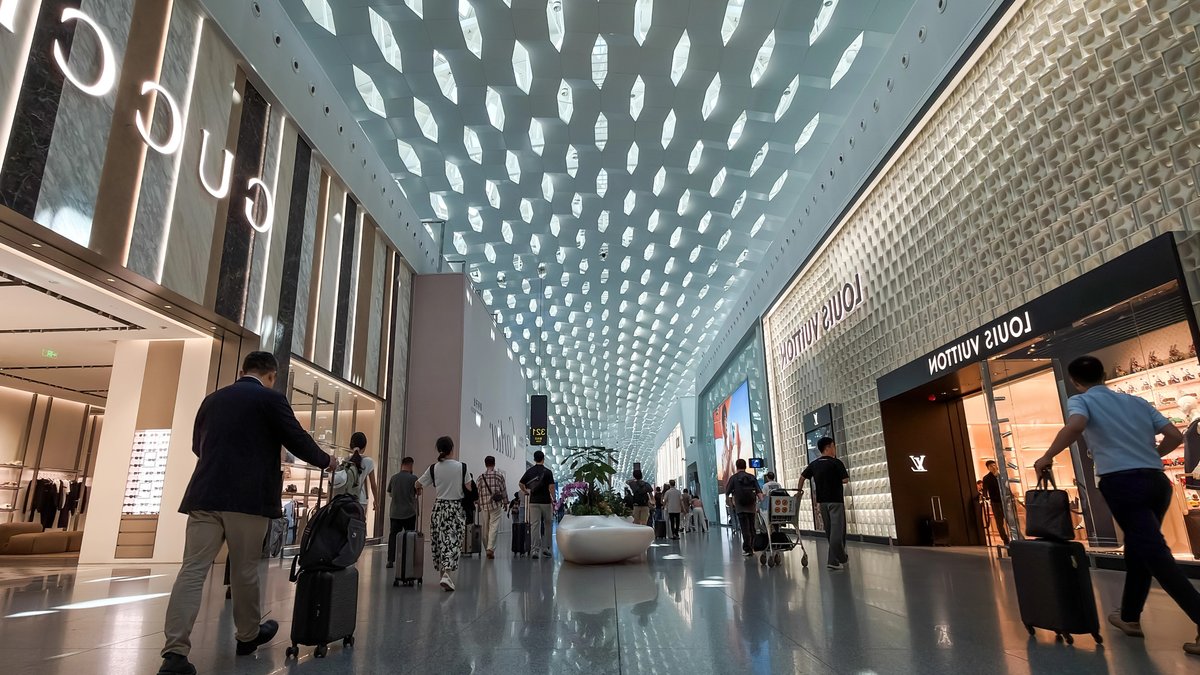
Luxury giants Hermès and Cartier are confronting sharper declines in mainland China, marking a shift as even the most resilient brands face weakening demand from the country’s affluent shoppers. Sales at both labels dropped by as much as double digits in August and September compared to the previous year, according to data from two research firms surveyed by Bloomberg. Unlike earlier in the year when these brands had largely withstood the broader luxury downturn, recent results suggest the pullback is deepening across the sector.
The slump extended beyond Hermès and Cartier. Sales among the 25 largest luxury labels—including Louis Vuitton and Gucci—also contracted further during the same period, with double-digit declines reported in mainland China. Concerns are mounting as Beijing’s widening scrutiny of offshore wealth and a cooling AI stock rally rattle private fortunes, testing the long-held belief that the luxury industry’s wealthiest clients are largely recession-proof.
Golden Week Fails to Lift Spirits
Despite increased spending on travel during China’s National Day holiday in early October, luxury purchases remained subdued. Business remained weak during China’s National Day holiday, a seven-day break in early October dubbed the Golden Week, even as consumers spent more on travel, according to people familiar with the matter who asked not to be identified because they are not authorized to speak publicly. Some executives at major luxury houses now fear the slump could become more widespread and persist until 2027, the people said.
Read Also: Young Chinese Drive $90 Billion Aesthetic Boom
This change in behavior contrasts with earlier years when wealthy Chinese consumers continued to splurge despite economic headwinds. Now, even premium segments are seeing hesitation. “The recurring message from our annual Asia consumer and luxury trip over the past three years was that conditions were difficult, but that ‘next year would be better,’” wrote HSBC analyst Anne-Laure Bismuth. “This time, however, meetings in Hong Kong, Xiamen and Shanghai provided no timeline or evidence of a recovery in Chinese luxury consumption.”
Regional Resilience Offers Limited Cushion
Demand from Hong Kong and Macau has partially offset losses in mainland China, particularly for high-end jewelry brands like Cartier, according to research firm JL Warren. However, this buffer appears insufficient to reverse overall trends. Hermès reported flat sales in the Asia-Pacific region for the third quarter, missing analyst forecasts for modest growth. With China comprising roughly 42% of its global revenue, the brand acknowledged that it is not immune to evolving consumer sentiment in the country.
Hermès CFO Eric Du Halgouet cited China’s challenging macroeconomic climate, sluggish financial markets, and ongoing tax-related campaigns as key factors suppressing demand. Meanwhile, LVMH recorded a double-digit decline in domestic Chinese sales during the third quarter, exacerbated by a trademark controversy involving Louis Vuitton. Purchases by Chinese shoppers overseas also fell by a mid-single-digit percentage, contributing to a 5% drop in revenues across Asia excluding Japan, the only region where LVMH posted negative growth.
Read Also: Proya Cosmetics expands globally after milestone
Shift Toward Understated Taste
Gucci exemplifies this challenge. Third-quarter sales declined 6%, falling short of analyst expectations, largely due to weak performance in China. Parent company Kering reported a corresponding quarterly downturn, reinforcing concerns about sustained softness in its core markets. Retail sales growth in August slowed further to 0.4% before improving in September. Big-ticket items including jewelry and cars performed the worst, plunging as much as 21% in business receipts in the two months.
Structural Challenges Ahead
While easier comparisons next year may help restore reported growth figures, underlying issues remain unresolved. Jacques Roizen, co-founder of Shanghai-based consultancy Foresight Performance Partners, emphasized that any uptick in sales would likely reflect base effects rather than genuine demand recovery. “Beneath those comparisons is a structural problem,” said Roizen. “Much of the aspirational middle-class have moved away from luxury, while wealthier consumers have become more cautious. The underlying pressures are unlikely to change quickly.”