
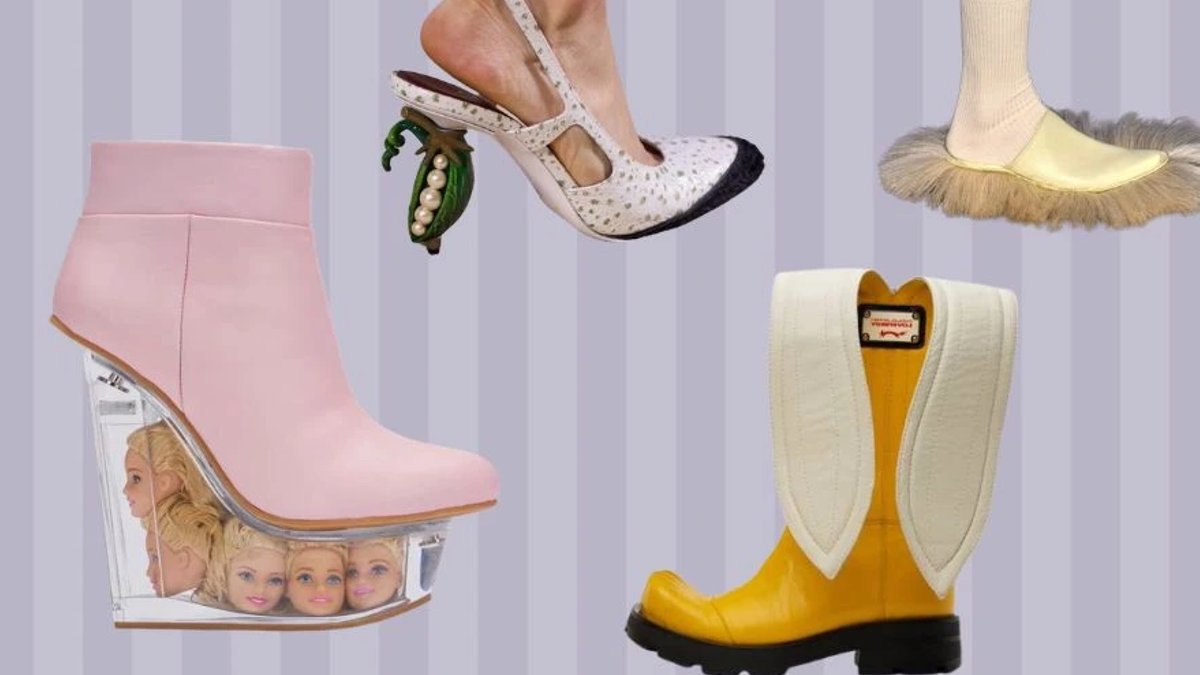
Strange shoes are dominating Xiaohongshu in 2026, with
Chanel’s soleless sandals and Chloé’s jelly mules leading the
trend. The hashtag #nicheshoes has garnered 1 billion views,
while #differentshoes has reached 244.4 million. Designs like
GCDS’ Morso heels and Charles Jeffrey Loverboy’s banana-peel boots,
first shown in 2024, blur the line between reality and AI illusion, further fueling
the trend.
Global fashion data reflects this shift. Skims’ jelly shoes and
Chloé’s mules ranked among the top products in the
Lyst Index for Q2 2026. Chloé’s peep-toe jelly mules, priced at
520 euros ($583), ranked fifth, while Skims’ $58
jelly shoes placed third. Even Jeffrey Campbell’s
doll-head wedges, originally from 2014, have resurfaced on
Chinese social media.
Why 2026 Became the Year of Weird Shoes
This change is evident in the popularity
of sculptural heels and cartoonish designs. Artificial
intelligence has amplified this, as social feeds filled with AI-generated
images have heightened demand for otherworldly designs.
Barbara Janeczek, curation manager at Lyst, noted,
“Playful footwear is resonating globally because fashion has an incredible ability to
normalize the previously unwearable. Demand for ‘weird shoe’ styles has grown almost fourfold
since 2022.”
Viral Shoes on Xiaohongshu in 2026
Despite this,
Chanel maintained its top spot on the Lyst Index. The design’s absurdity made it impossible to ignore, driving visibility despite mixed reactions.
Chloé’s jelly mules and Skims’ jelly shoes capitalized on
nostalgia and luxury branding, ranking high on the
Lyst Index. The hashtag #jellyshoes has amassed
38 million views on Xiaohongshu, with Skims’ version further
boosting the trend.
Fishnet shoes, led by Alaïa, have also gained traction, with
the Chinese-language hashtag for fishnet shoes reaching 19.5 million views. Alaïa’s fishnet styles dominate the #alaiashoes hashtag, which has
9 million views. Newer brands like Abra, founded in
2020 by Abraham Ortuño Perez, are innovating with designs like
a ballet pump that combines net and classic flat elements.
Vibram FiveFingers, initially a barefoot running shoe, has
crossed into fashion and maintained popularity on Chinese social media. Its FiveFingers
V-Soul ranked fifth on the Lyst Index in
Q2 2025, and the brand later expanded the style to unisex sizing,
from EU 36 to 46.
Bite and claw heels from GCDS and Naomi Gilon
showcase how shock value can drive viral attention. GCDS’ Morso heels, first
shown in 2022, remain widely circulated on Xiaohongshu, as do
Gilon’s monstrous heels with mangled toenails.
The Role of AI and Meme Culture in Shoe Trends
Artificial intelligence has significantly influenced shoe trends in 2026. Social media feeds are saturated with AI-generated images, prompting real products to compete with these digital creations. This has fueled a demand for designs that appear otherworldly and cartoonish, with users often stopping to question the authenticity of shoes like GCDS’ Morso heels and Charles Jeffrey Loverboy’s banana-peel boots.
Sustainability and Value in Footwear
Consumer priorities have shifted toward quality, durability, and sustainability. A 2026 report by Lectra’s Retviews highlights that shoppers are buying fewer items but investing more in each purchase. This trend aligns with a growing willingness to pay a premium for sustainable and traceable fashion.
PwC’s Strategy& found that 74% of consumers would pay extra for sustainability-verified products, with 26% accepting up to a 20% premium. This shift shows the importance of ethical considerations in the footwear industry, even as brands focus on creating attention-grabbing designs.
Meme culture has also played a role in the rise of strange shoes. Luxury brands have long used provocative designs to spark online debates, a strategy that drives visibility and engagement. Maison Margiela’s Tabi shoes, introduced in 1988, exemplify this approach, becoming a lasting symbol of both insider cool and outsider curiosity.