
Beauty brands are increasingly turning to food-inspired scents and textures to create desire. Kiehl’s, for example, has released products with cereal milk and buttercream scents, while Armani Beauty launched blushes in caramel and cinnamon shades.
This trend goes beyond novelty. Spate’s data shows a 57.6% rise in consumer interest in gourmand fragrances in 2025, with marshmallow perfume jumping 91.7%. Food-inspired notes like vanilla, pistachio, and chocolate are also gaining traction.
Why sweetness sells
“Sensory marketing works,” says Laurence Lim, founder of Cherry Blossoms Intercultural Branding. “Food associations are genuinely more concrete than plain descriptive language.”
Brands like Sol de Janeiro, with its pistachio and caramel scents, and Rhode, known for its “glazed” aesthetic, have seen significant success. Sol de Janeiro became Sephora’s top-selling brand in 2024, generating $780 million in annual sales.
When sweetness becomes brand identity
Some brands are building their identity around food. Gisou, for instance, sources honey from its founder’s family bee garden in the Netherlands, making honey a core part of its story and formulations.
However, simply borrowing sweet visuals without a corresponding story or brand identity can lack depth. As Moqian Sun of The Harvest notes, “Without a corresponding story, ingredient credentials or consistent brand identity, the concept lacks depth and could easily be replaced by the next passing trend.”
The appeal of sweetness also varies across markets. In the US, it often connects to comfort and nostalgia, while in China, food is a shared social experience tied to care and nourishment.
Despite these differences, Lim sees a common emotional driver: “Gen Z shares a quiet consensus: life is hard, and bitter in all kinds of ways, so they reach for sweetness across every part of their lives to balance it out.”
For heritage brands, food collaborations can help bridge the gap with younger consumers. Kiehl’s partnership with Milk Bar, for example, made its products more playful without compromising its skincare identity.
However, the risk of overdoing it is real. Too many collaborations can lead to consumer fatigue and dilute a brand’s core strengths. As Sun warns, “Sweet, milky and honey-inspired aesthetics risk becoming generic, interchangeable templates.”
Sweetness as a Sensory Shortcut
The industry’s focus on actives and technology has left room for sweetness to offer a more instinctive route into products. By associating sunscreen with frozen yogurt or lip balm with birthday cake, brands can create a more immediate connection with consumers.
Balancing Sweetness and Brand Identity
As food-inspired beauty gains popularity, brands must balance sweetness with their core identity.
Cultural differences also play a role in how food is perceived. In China, tea, herbal ingredients, and traditional medicine-inspired food may offer a more defensible point of difference for beauty brands, as imported strawberry-and-cake aesthetics become ubiquitous.
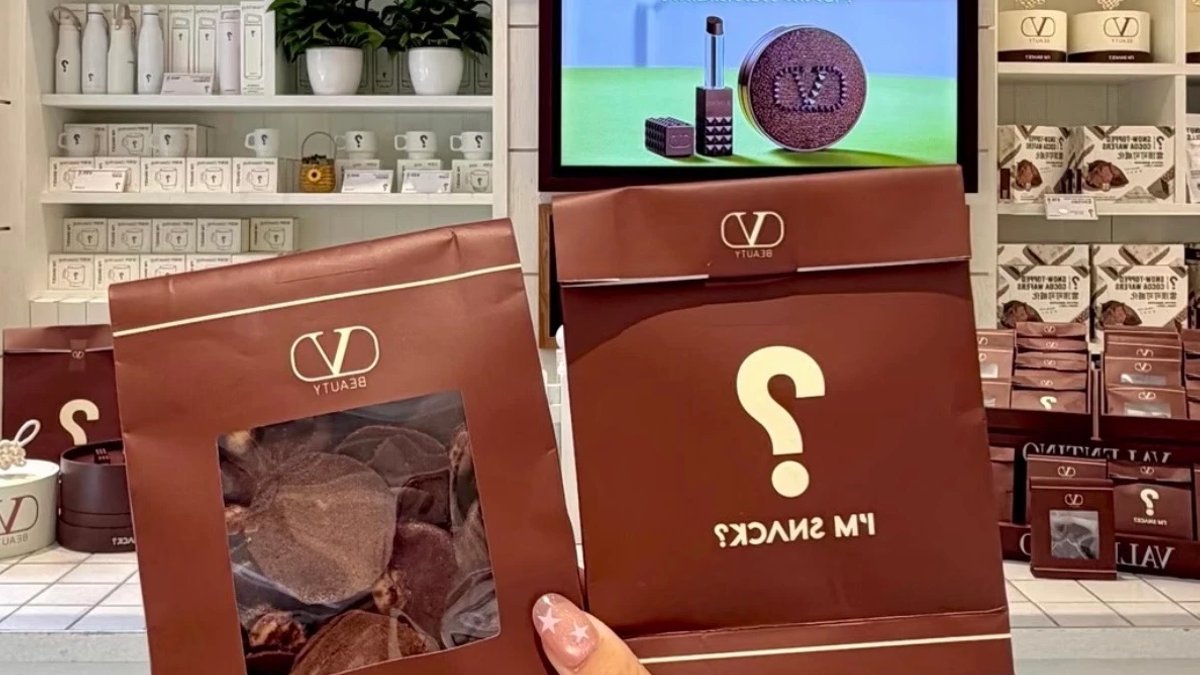
Limited-edition, temporary, and playful collaborations, such as Valentino Beauty’s I’m Snack tie-up, can maintain a brand’s premium feel while incorporating food-inspired elements.
Food Partnerships and Brand Authenticity
Brands are increasingly linking with food to strengthen their identity, but success depends on authenticity. Gisou, rooted in six generations of beekeeping, uses honey from its family’s garden in the Netherlands, tying its formulations and story to its origins. This direct connection contrasts with brands that merely adopt sweet visuals without a corresponding narrative or ingredient credentials, risking a shallow concept that could fade with trends.
Valentino Beauty’s collaboration with I’m Snack in Shanghai exemplifies a tight connection between product and experience. Its “chocolate workshop” aligned with the brand’s chocolate-toned makeup collection, reinforcing its color story through drinks, snacks, and store design. Such partnerships work when they extend an existing brand element rather than attaching unrelated food themes.
Cultural nuances also play a role. While cinnamon-roll references resonate in the US or Europe, they may lack traction in Asia, where heavy artificial sweetness can feel cloying. Brands with herbal credentials, like those inspired by traditional Chinese medicine, may find more success in these markets. As food aesthetics become easier to replicate, culturally specific references could offer a stronger point of difference.