
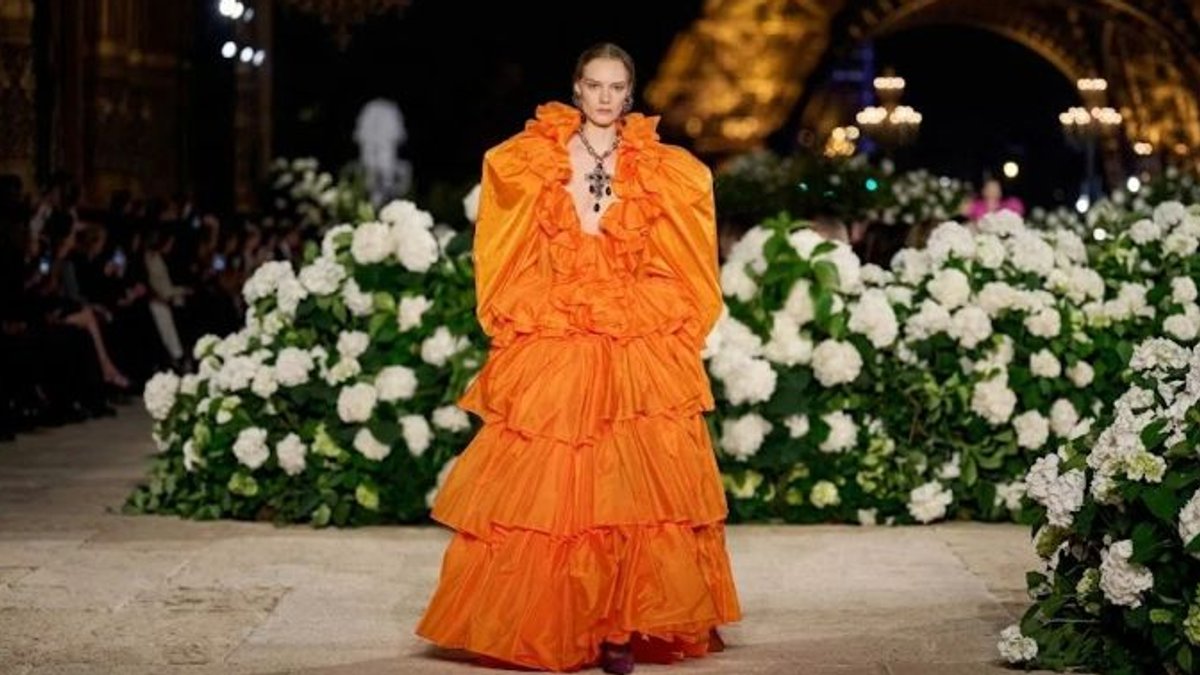
Chanel, Dior, and Saint Laurent have introduced pumpkin and rust orange into their autumn-winter 2026 collections, marking a shift away from the deep wine tones that dominated previous seasons. The trend has gained visibility on international runways, with Milan Fashion Week street style reinforcing its prominence. Pantone’s New York Fashion Week report also identified these warm-earth hues as a central theme.
Indian designers were among the first to adopt the color. Fabindia’s Rust Viscose Silk Printed Long Kurta and Suta’s recurring rust saris and blouses demonstrate its adaptability. Raw Mango’s “Reis” sari combines silk-organza with dori embroidery, while Anavila’s Delhi store focuses on terracotta shades. Natural dye methods, such as those used by 11.11/eleven eleven with rubia, iron rust, and harda on handwoven linen, maintain the look’s authenticity.
Occasion wear brands have incorporated the shade into their designs. Sheetal Batra’s pumpkin kurta set features chanderi fabric with gharara pants and a scarlet dupatta. Priyanka Singh’s orange kurta includes sequin zardosi and mukaish embroidery. Masoomm’s organza dupatta set and Nicobar’s Indus Shirt in rust expand the range for men. Mainstream brands like Libas and Biba offer rust wool co-ords and printed palazzo sets, while Nykaa Fashion lists orange kurta sets from designers such as Qissa and Mokosh.
The color’s connection to Indian craft traditions, including Ajrakh, bandhani, and zari-woven silks, enhances its appeal for both festive occasions and export markets. Clusters of natural dyes using madder and rust tones ensure the palette remains grounded in heritage while attracting global buyers.
Designers are pairing the shade with neutrals like olive, denim, and brown to balance its intensity. This strategy makes pumpkin a versatile option for daily wear and special events.