
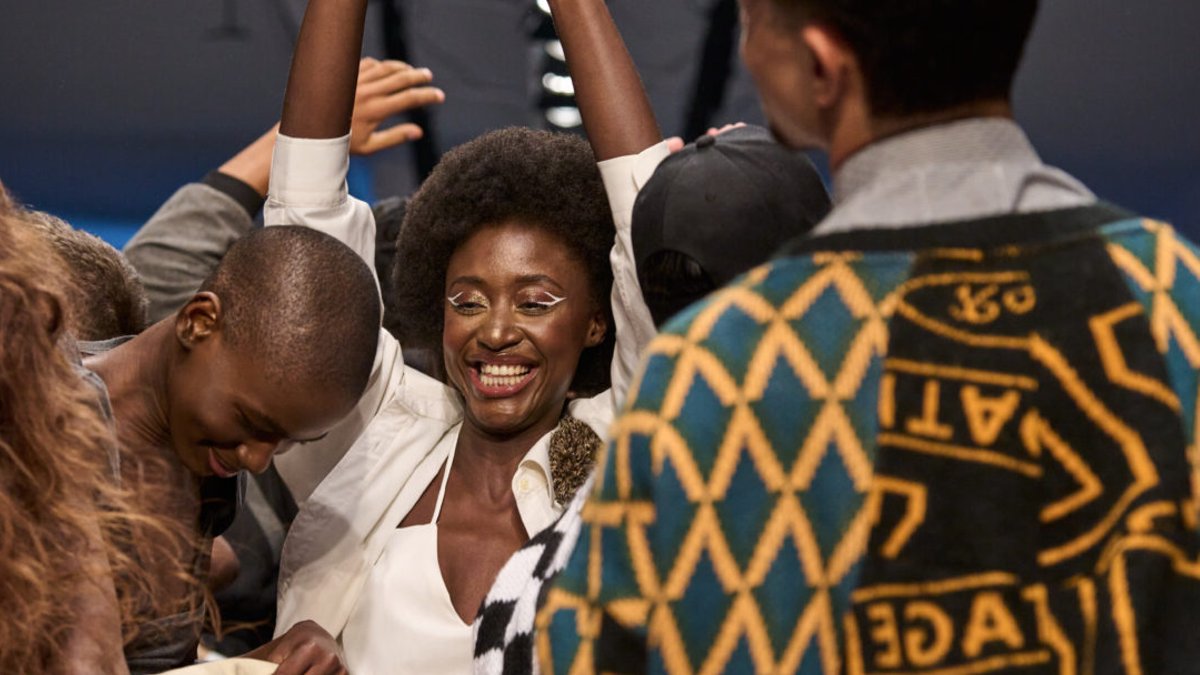
Dubai Fashion Week made sustainability its central theme in 2023, with Emergency Room standing out for how it merged environmental responsibility with provocative design. The brand’s SS24 collection, Neverland High, went beyond material recycling to embed a critique of outdated education systems into its streetwear-inspired pieces, demonstrating fashion’s power to challenge societal norms through more than just fabric choices alone. The collection’s narrative aligns with Dubai Fashion Week’s broader push for circular design, where brands like Pipatchara also made headlines for their innovative use of recycled materials—such as signature bottle-cap accessories—while Emergency Room’s approach stood apart through its thematic depth.
The collection’s title reflects a deliberate pushback against rigid academic structures, positioning itself as a “journey of self-discovery and growth” for students trapped in broken systems. Designer and creative director Eric Mathieu Ritter has consistently tied his work to activism, and this season’s focus on self-expression through upcycled, mixed-media garments reinforced that commitment.
Each piece in Neverland High was crafted to reject the sterile, mass-produced aesthetic dominating fast fashion, instead adopting the raw, handcrafted imperfections that give garments character. The collection featured cuts of mix and matched fabrics, crochet tops and pants, trousers turned into skirts, and dynamic contrasted jeans, blending different aesthetics such as the 2000s core and rock & roll. Music influences also carried the show as the models strut and have fun.
The runway’s soundtrack, featuring Another Brick in the Wall by Pink Floyd alongside a rendition of Comfortably Numb—reinforced the collection’s rebellious, introspective tone. The music selection wasn’t arbitrary; Pink Floyd’s anthems of systemic critique mirrored the collection’s themes.
Emergency Room’s sustainability efforts extend beyond material selection to overhaul production entirely. The brand partners with local markets in Tripoli to source deadstock fabrics, then collaborates with seamstresses and tailors to transform discarded materials into new designs. This approach creates an ethical supply chain while keeping prices accessible, a rare balance in an industry known for its speed and exploitation. Unlike many brands that treat upcycling as a superficial marketing tactic, Emergency Room’s process demands meticulous craftsmanship. Each garment reflects the skill of tailors who identify and refine imperfections, turning them into intentional design elements, which not only extends the life of materials but also ensures durability and practicality for everyday wear.
Ritter’s philosophy of clothes being real and made by real people for real people challenges the fashion world’s fixation on constant novelty. Unlike brands that treat upcycling as superficial marketing, Emergency Room’s process demands significant craftsmanship. The brand’s commitment to ethical production is rooted in its founder’s belief that fashion should serve functional, wearable pieces rather than disposable trends. Each collection, including Neverland High, is designed to be worn in daily life, not just displayed on a runway. This ethos extends to the materials themselves, deadstock fabrics and repurposed garments are chosen not just for their sustainability, but for their ability to tell a story, ensuring every piece carries both environmental and cultural significance.
This season’s Dubai Fashion Week confirmed that sustainability in fashion is evolving beyond basic recycling into a movement that challenges industry norms at every level.